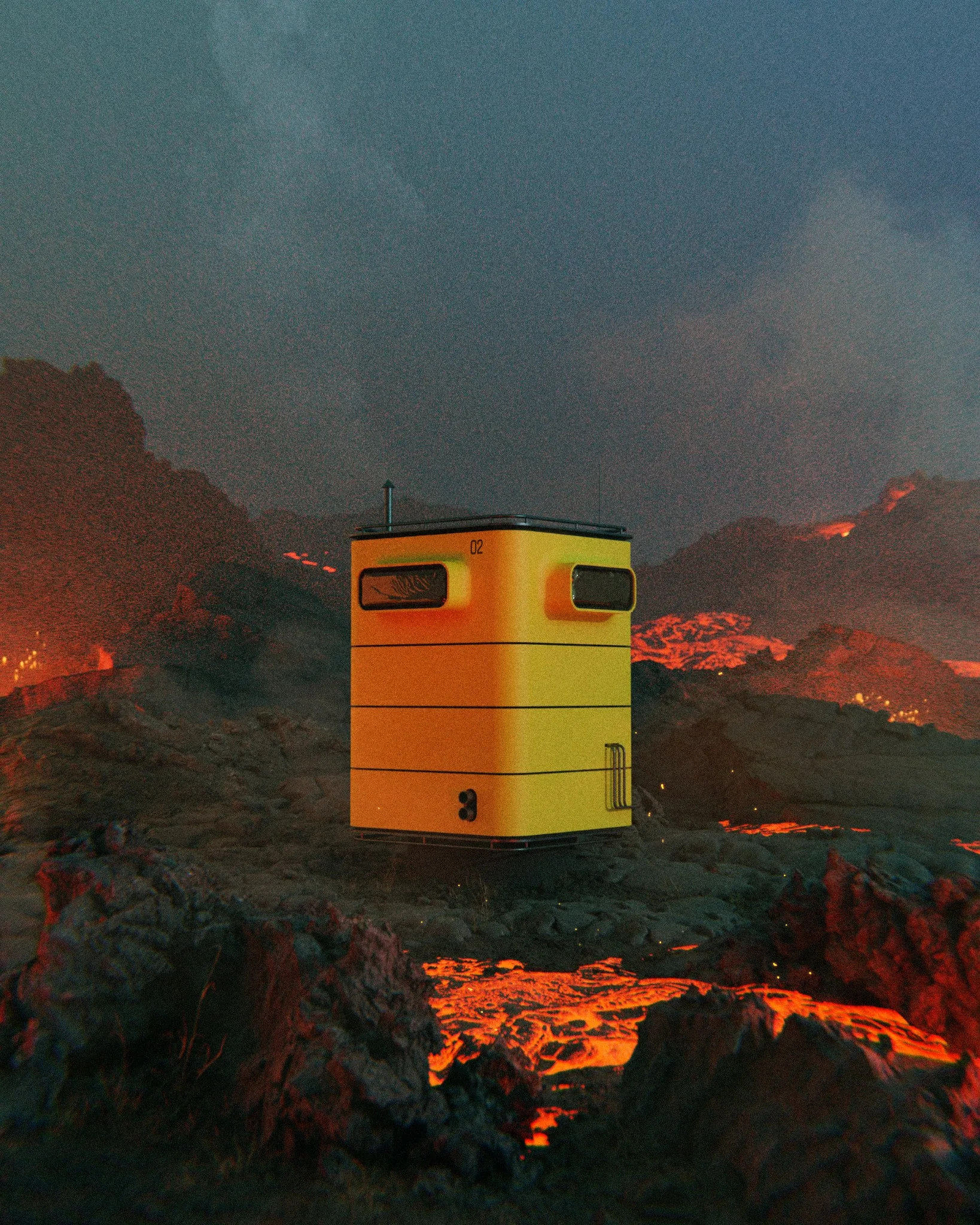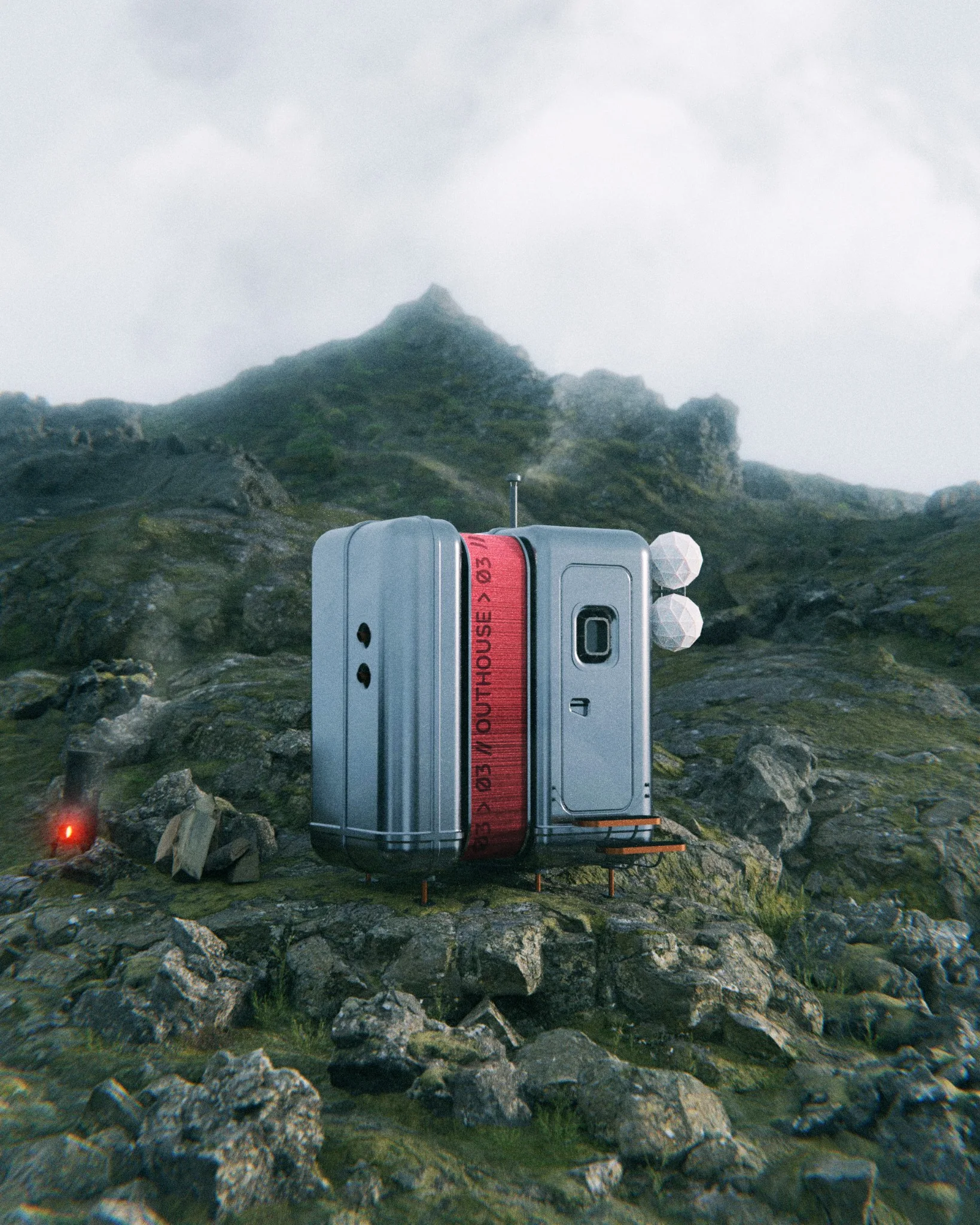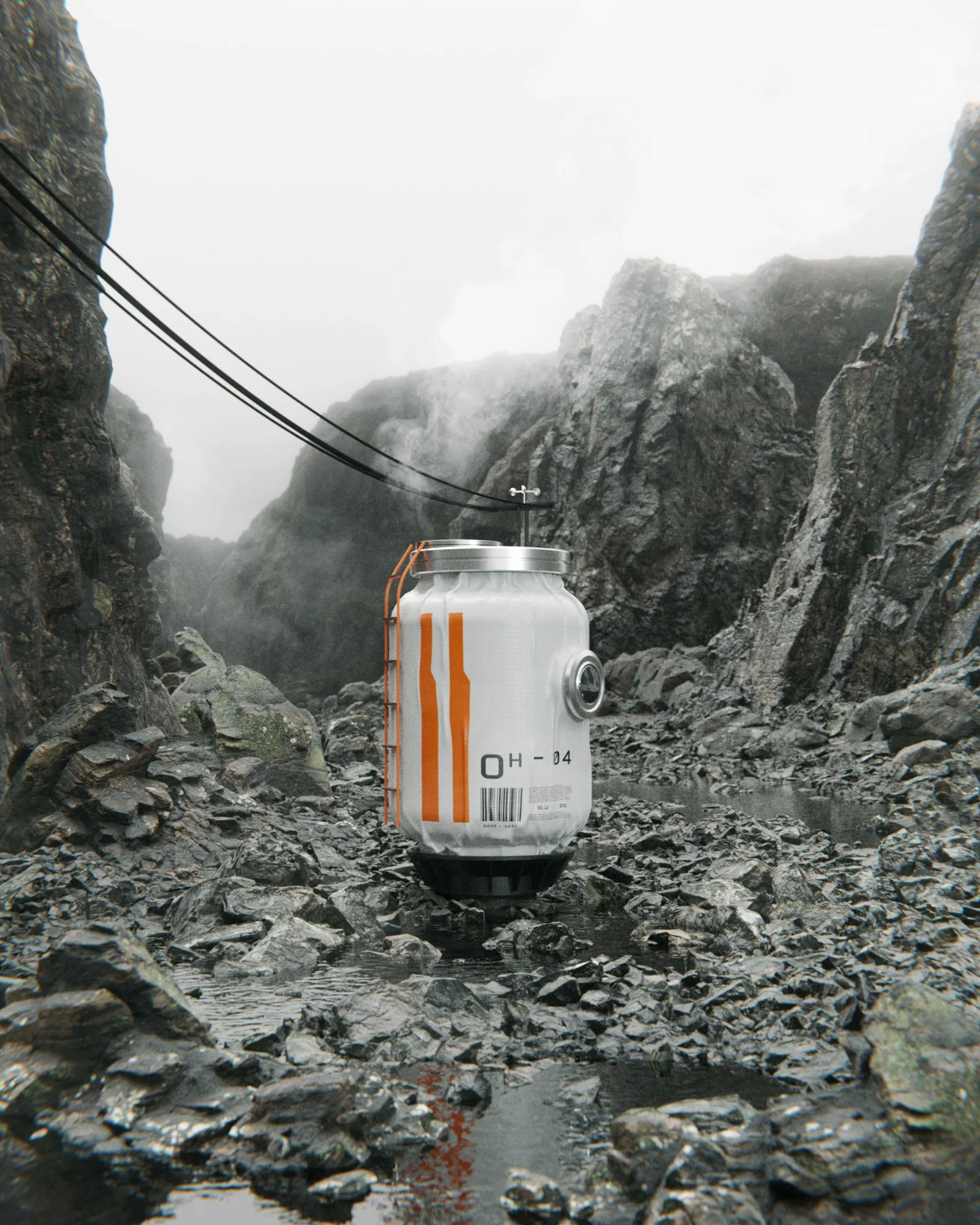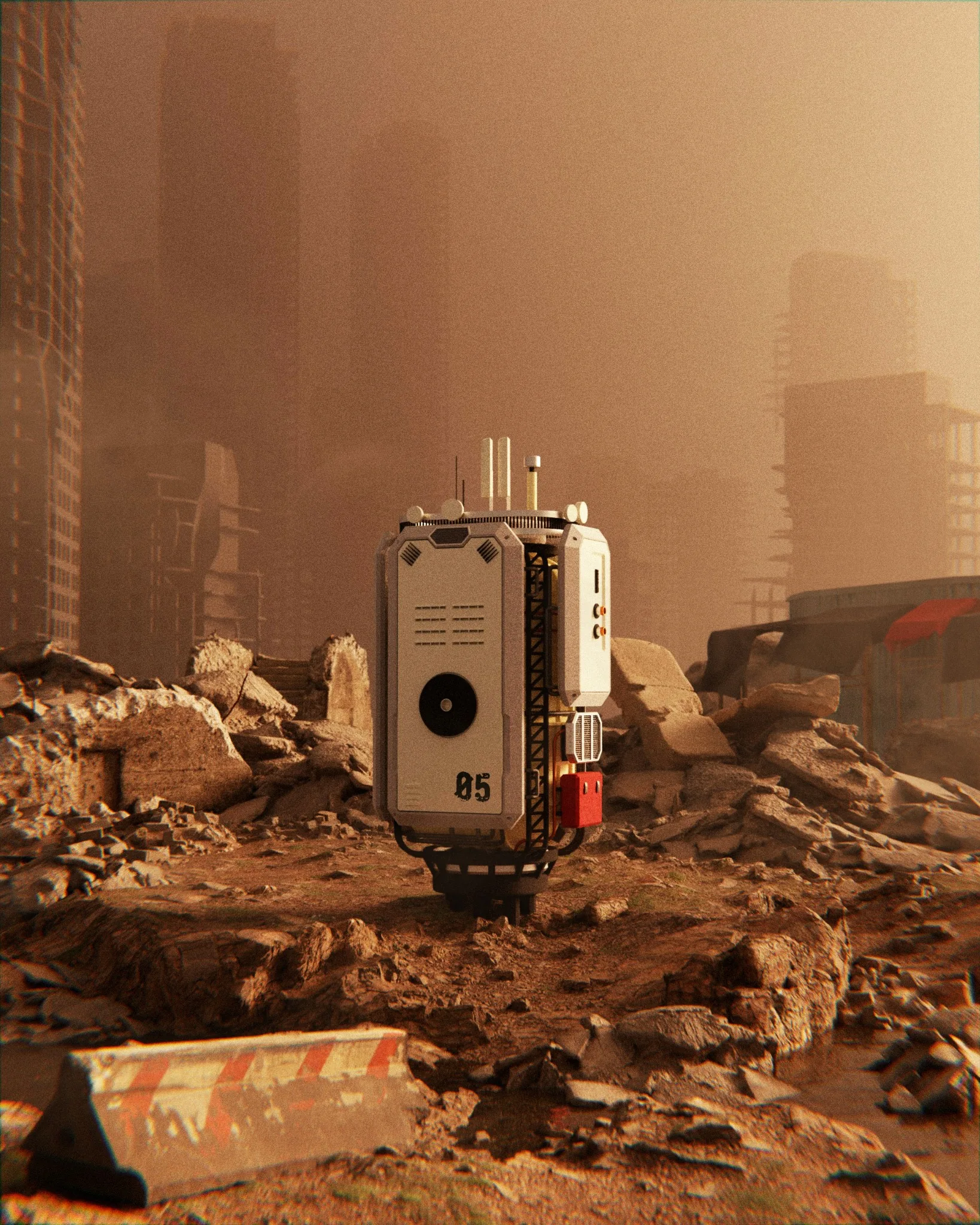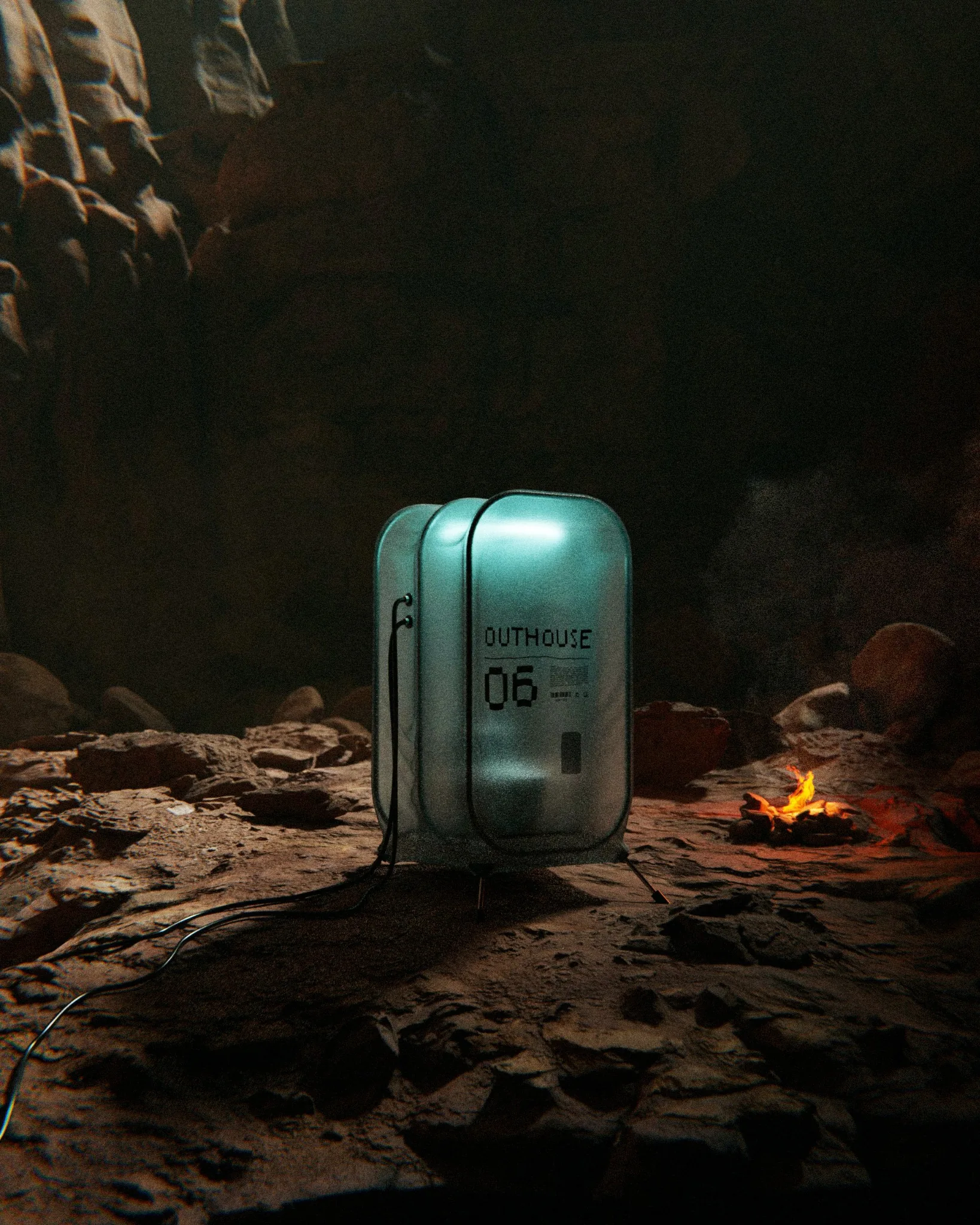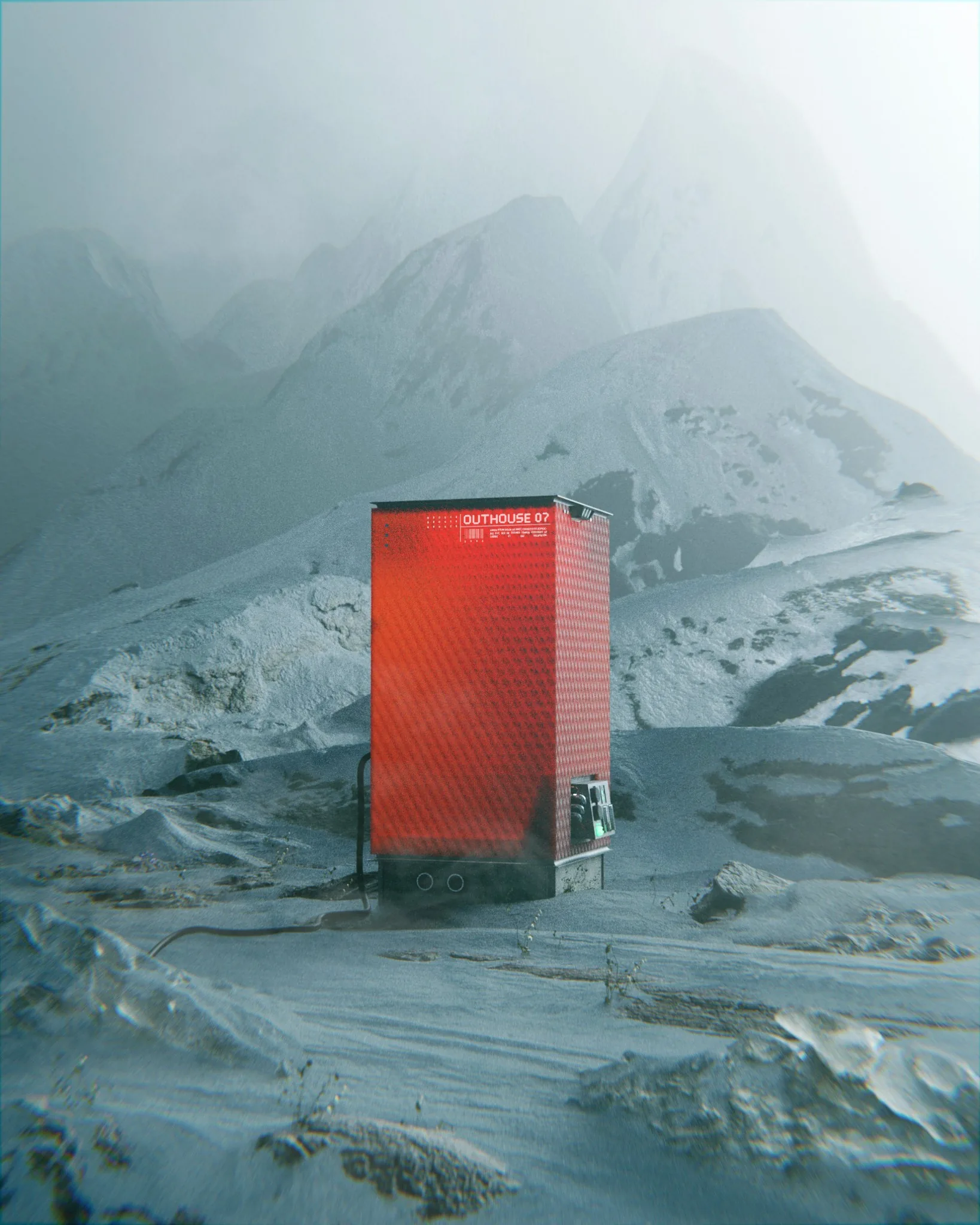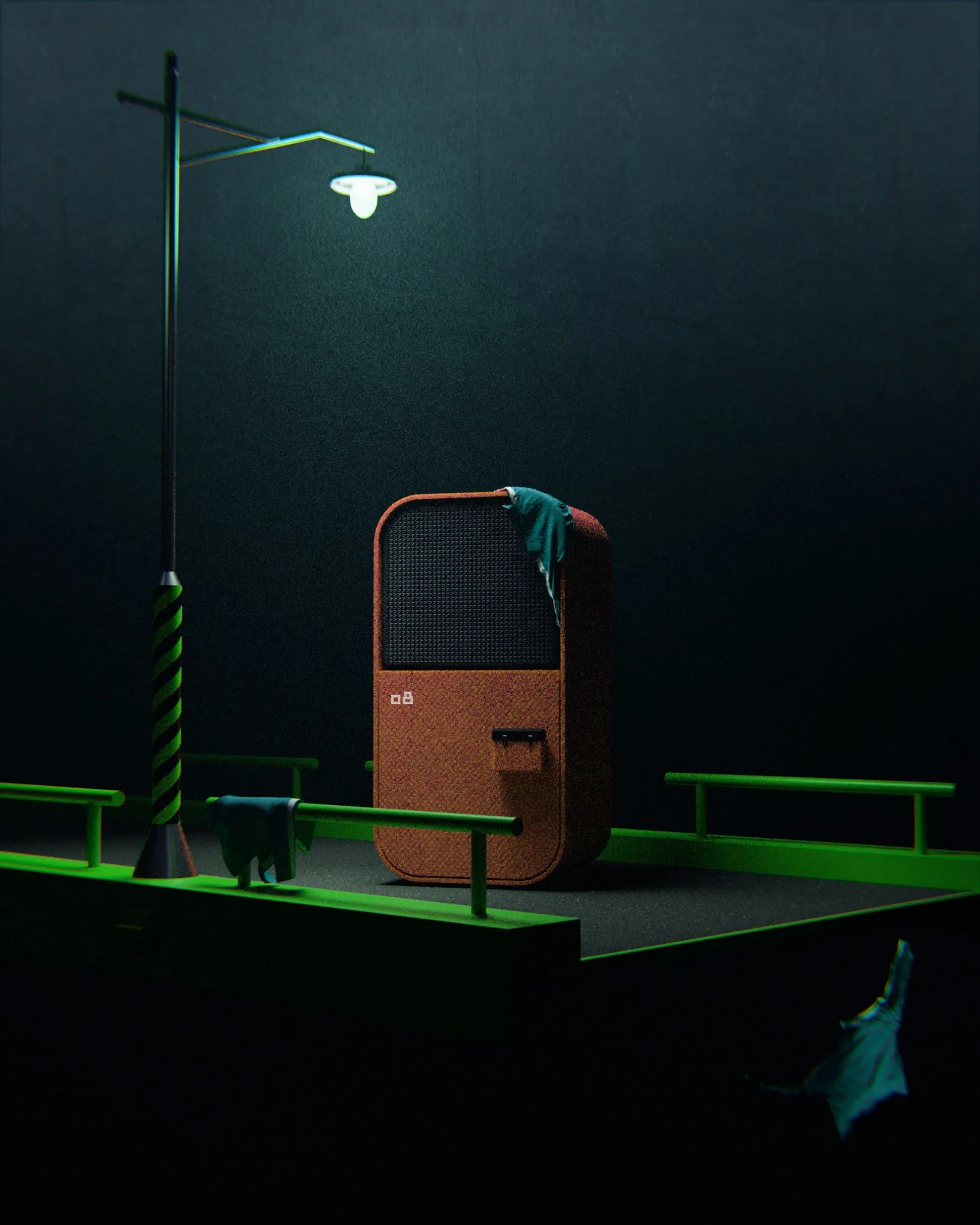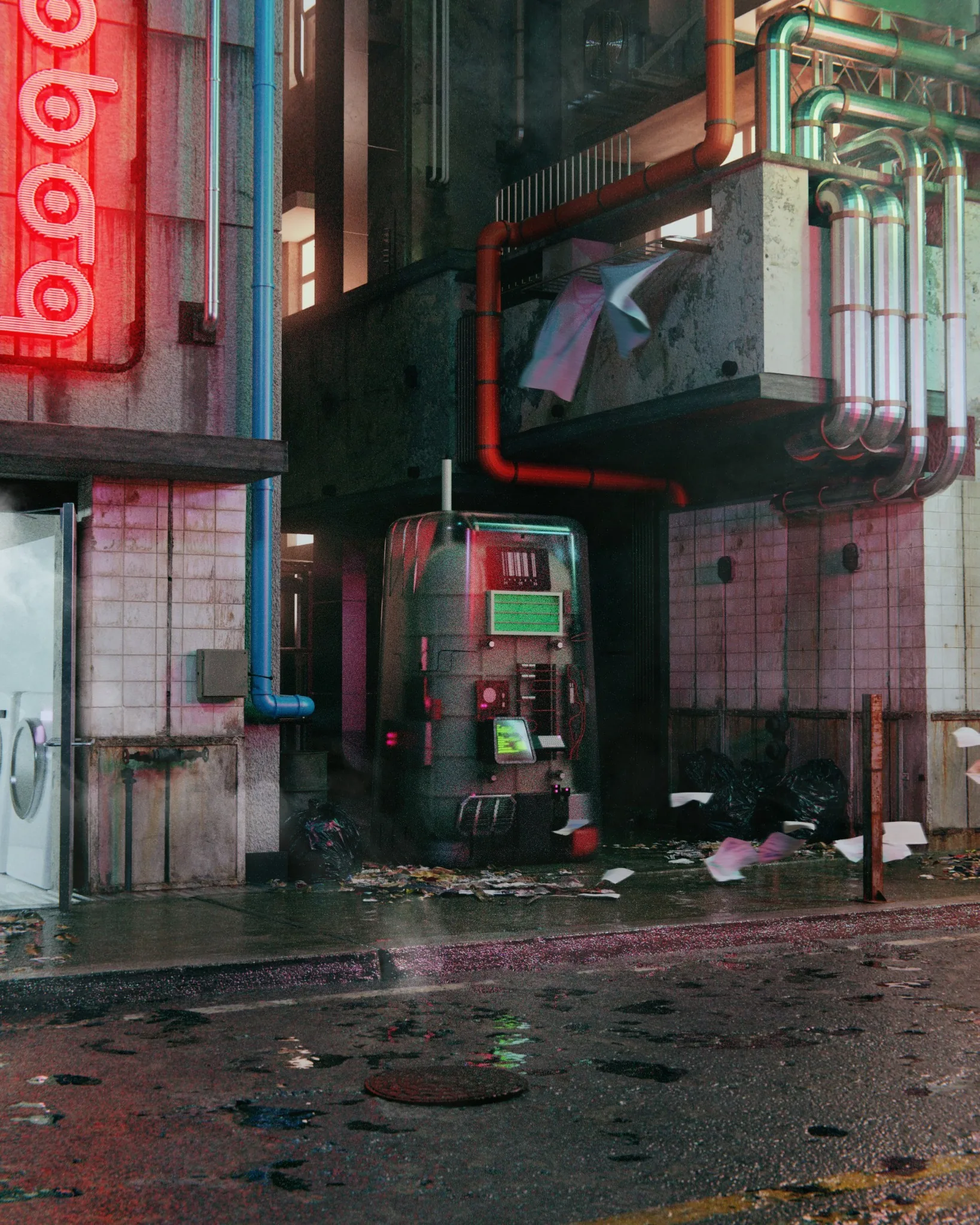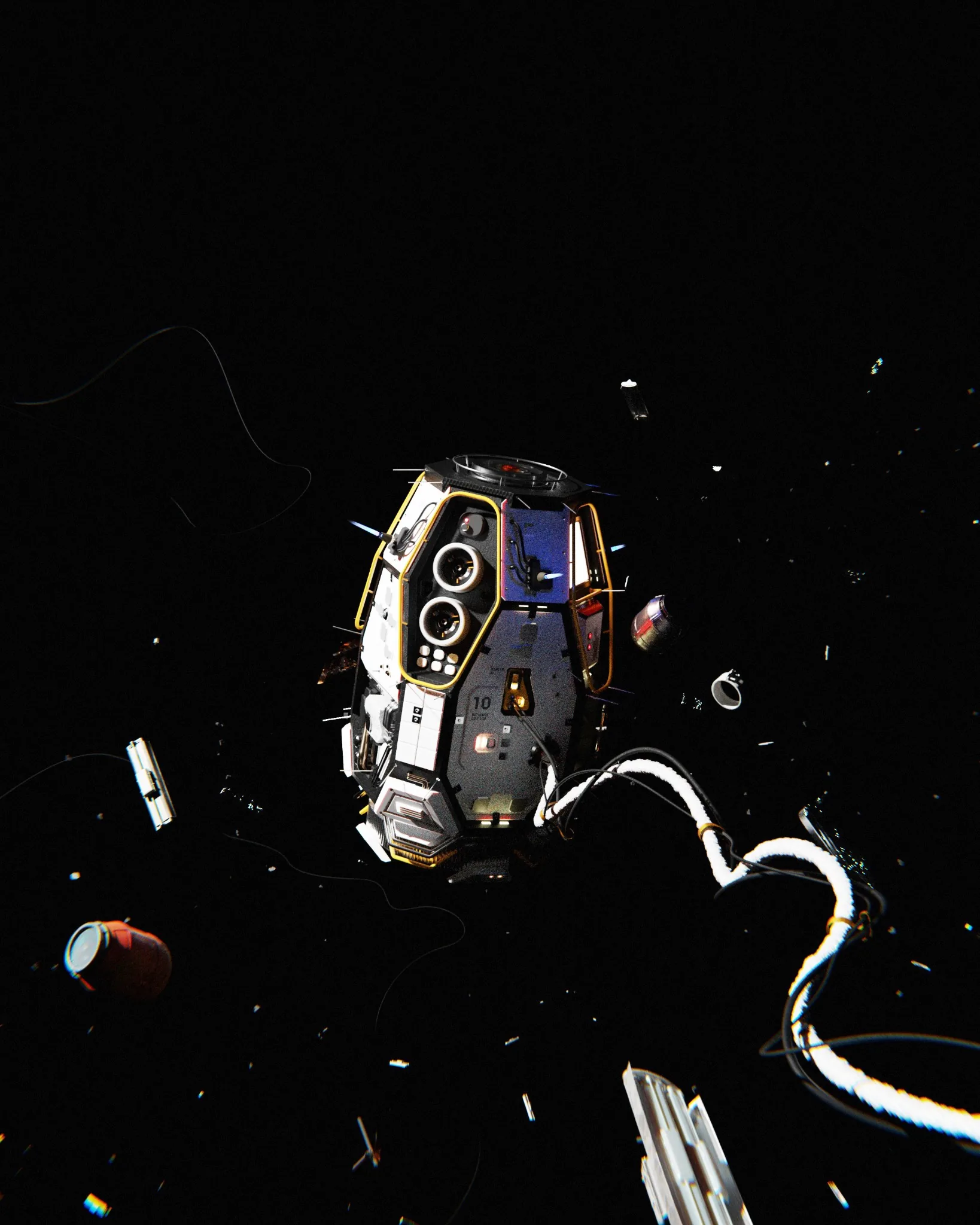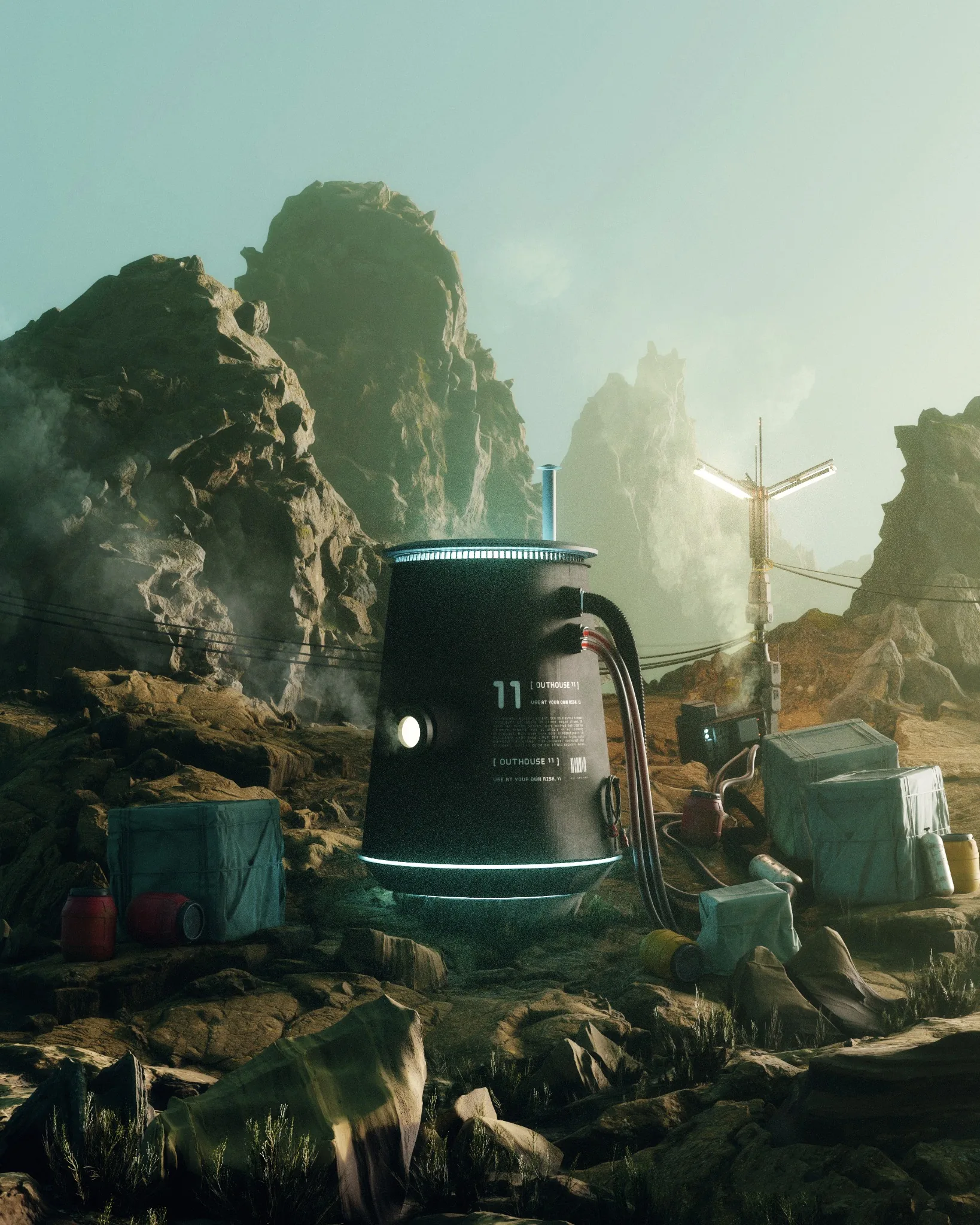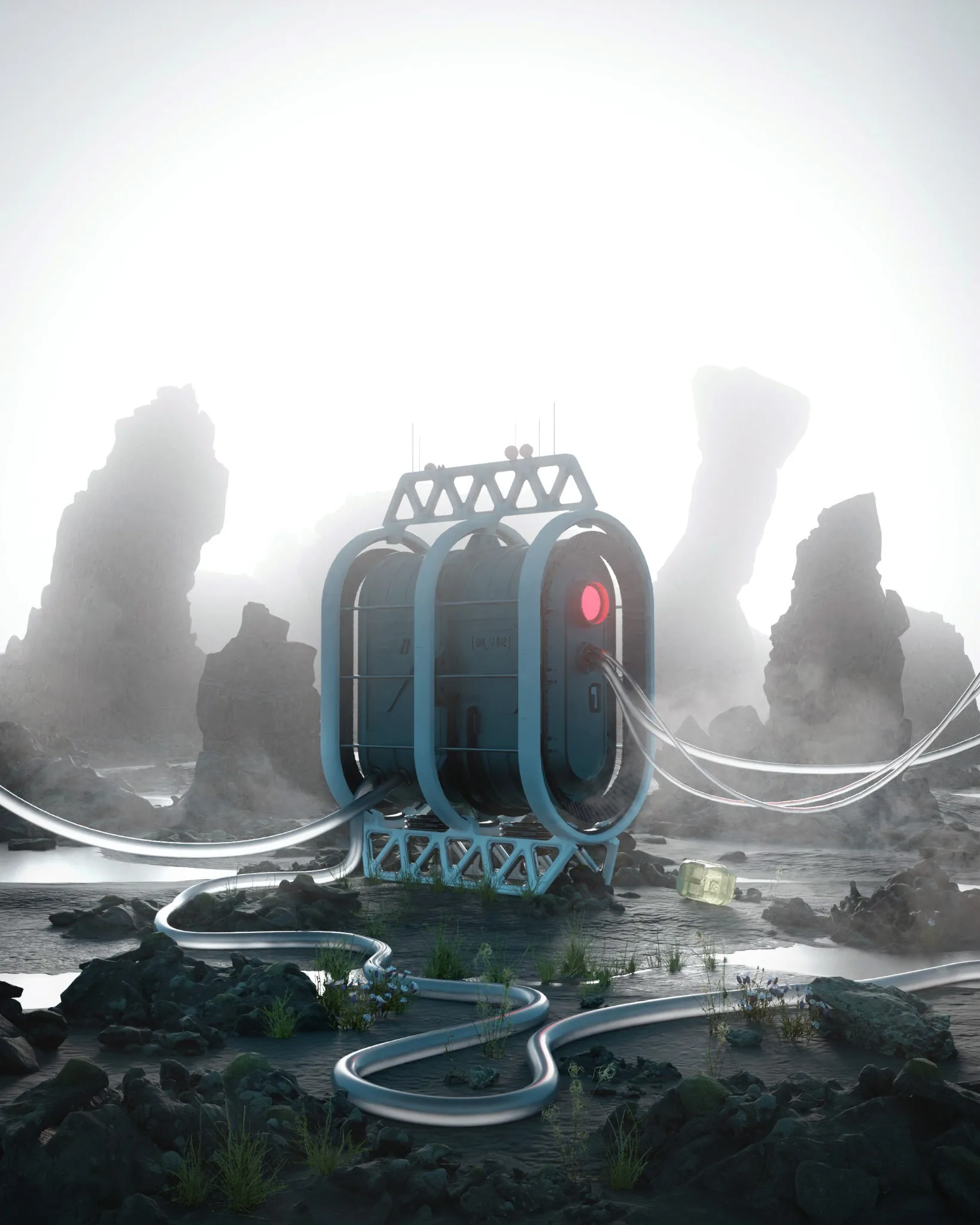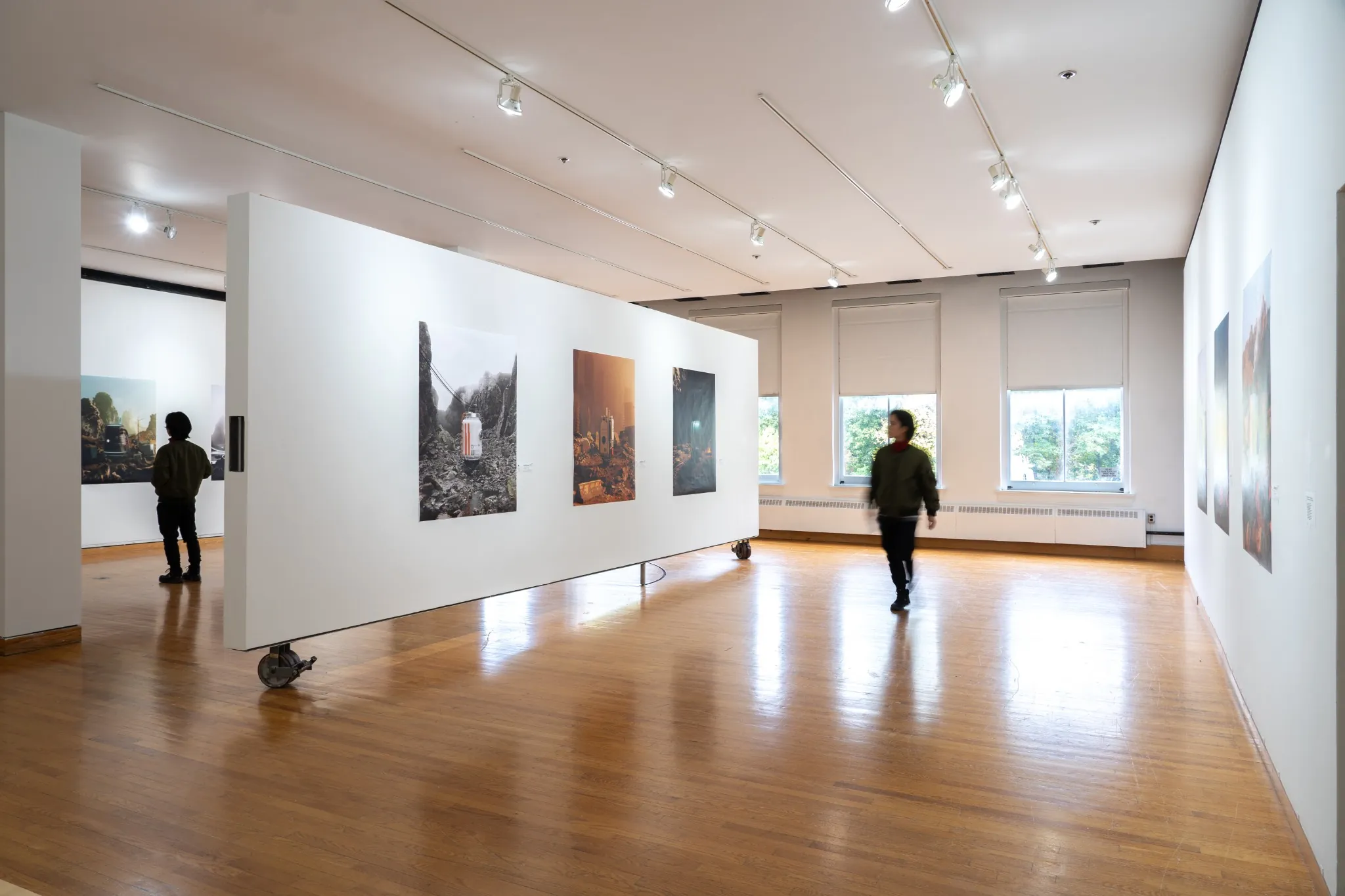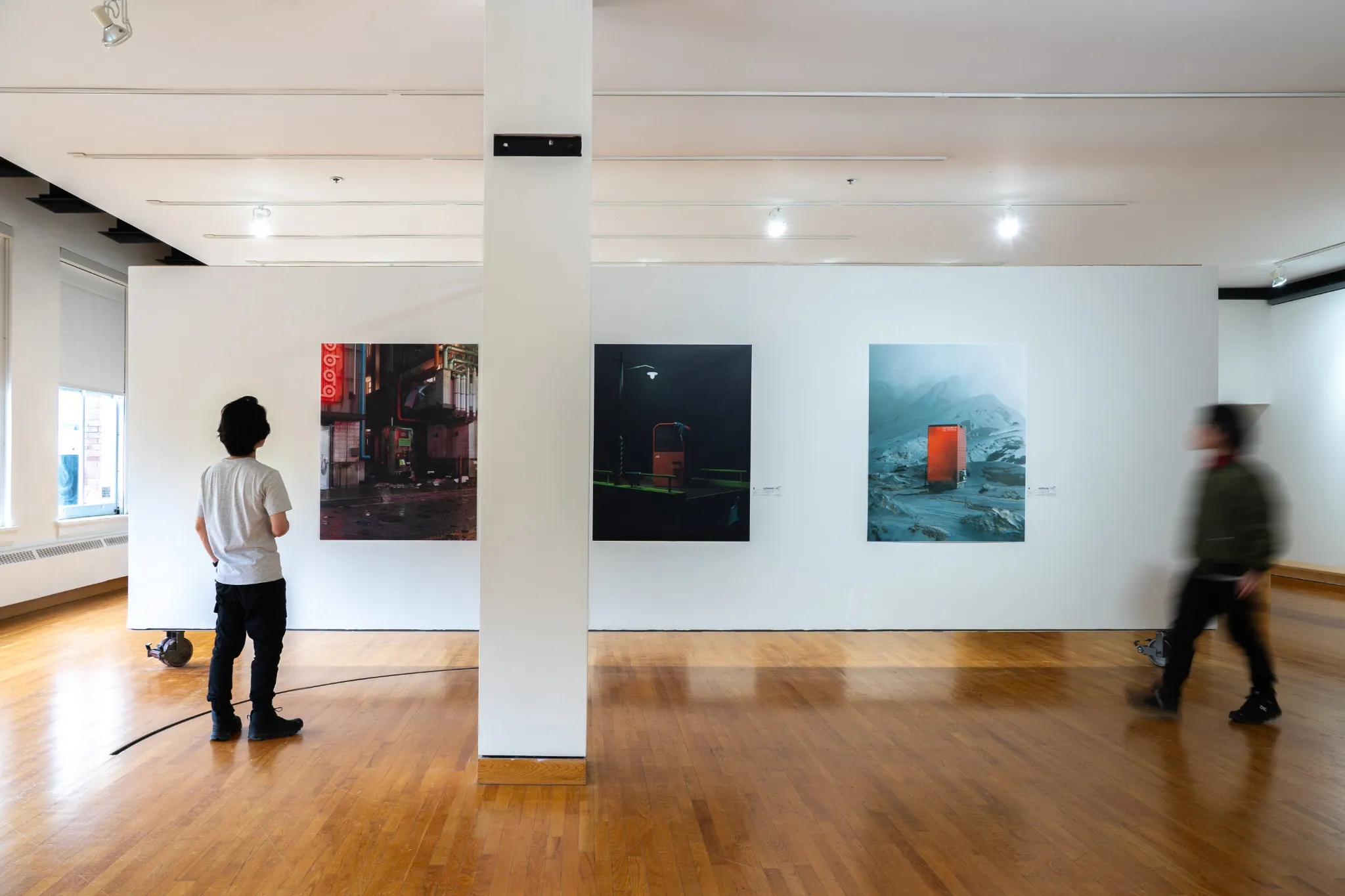

This exhibition presents a serialized collection of speculative architectural artifacts dispersed across extreme and marginal environments—volcanic fields, alpine ridgelines, urban back alleys, military encampments, orbital space, and blackened shorelines. Each object is numbered, self-contained, and operational, reading less as a singular building and more as a node within a larger, unseen system. Together, they suggest an infrastructure that persists independently of comfort, permanence, or human centrality.
Formally restrained yet materially exaggerated, the structures oscillate between capsule, container, and product. Translucent skins, sealed volumes, exposed wiring, communication devices, and modular bands point to systems of deployment, customization, and control. Some appear inflatable or temporary, others fortified or industrialized, while several exist in states of fragmentation or suspension. Their repetition and variation imply mass production, while their isolation hints at a breakdown—or deliberate abandonment—of centralized oversight.
The landscapes they inhabit are neither utopian nor ruined backdrops, but indifferent terrains that absorb these objects without accommodating them. Nature, here, is not romanticized; it coexists with infrastructure that monitors, survives, or simply remains active. Human presence is implied only through scale, maintenance, or residual artifacts, leaving the purpose of each structure partially obscured.
Rather than projecting a distant future, the exhibition extends present-day conditions: logistics without users, architecture as equipment, and technology operating beyond visibility or authorship. Meaning is not delivered through narrative resolution, but suspended—distributed across objects that continue to function even as their origin, ownership, and necessity become increasingly unclear.
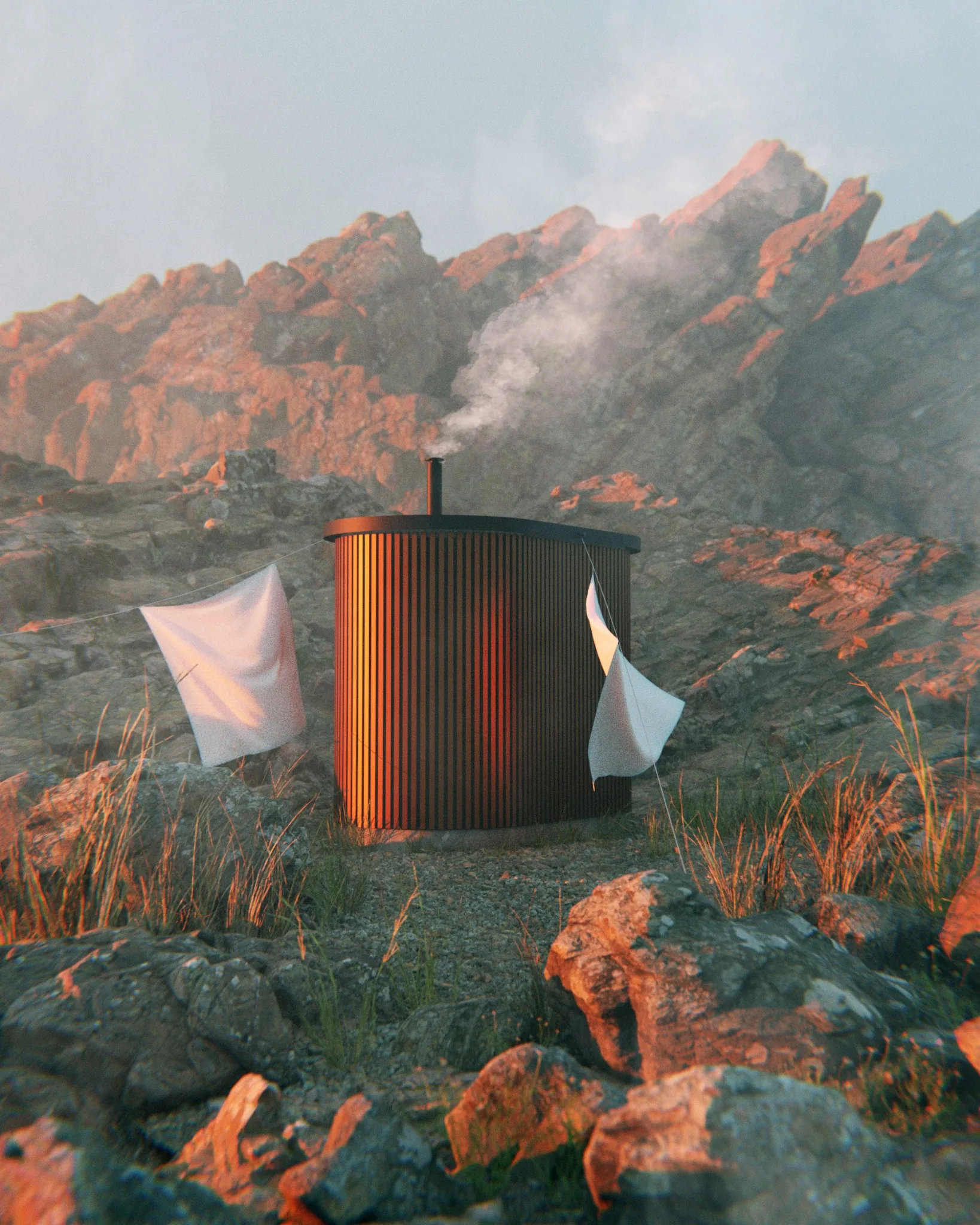
Outhouse.
[dystopian chronicles]
[art]
[ongoing]